
Reality Bites: Trump’s foreign policy fever dream
How hubris, Israeli entanglements, and a total disconnect from reality are accelerating the decline of American empire.

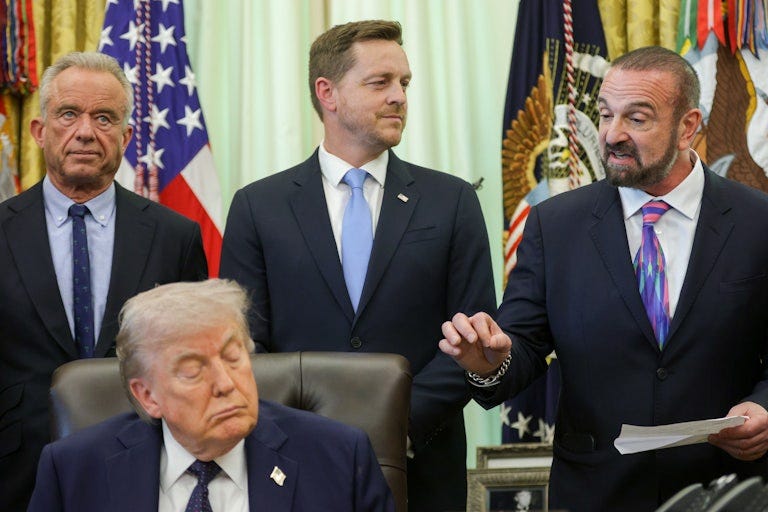
Hostilities have technically resumed in the Iran War. Iranian reports (denied by CENTCOM) indicate a US warship was fired on for allegedly breaching the ceasefire, followed by additional strikes from both sides. Targets have also been hit in the Gulf, with US strikes reported on Iranian locations. The fragile ceasefire, which has barely held since hostilities paused after the initial Israel-US-Gulf war on Iran, is now crumbling.
Reports that Iranians struck a US warship have been verified by multiple sources outside Washington. However, the White House has refused to call the successful strike a breach of ceasefire terms. This indicates reticence in the US to escalate further and reveals a clear level of indecision and anxiety in Washington.
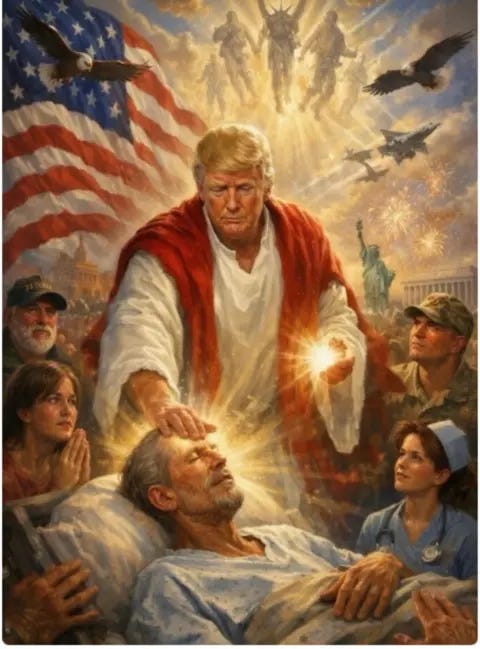
The Trump White House is in visible panic. Beneath the steady stream of AI-generated social media posts—Trump clutching too many Uno cards one day, “healing the sick” on the White House lawn the next while a Baal-like shadow looms overhead—lies a palpable discombobulation. This frantic performance only deepens the growing disconnect between Washington’s fantasies and geopolitical reality, the very fracture that has produced the present crisis.
That disconnect between reality and ambition plagues Donald Trump’s second term. It was evident in the first hundred days, when aggressive ICE operations targeted ordinary Americans in the Heartland, while pardons were issued for criminals and those accused of genocide, and plans were drawn up for casinos in Gaza. It appeared in his claims on Greenland, his actions in Venezuela, and his threats against Cuba. But the clearest example of Trump’s detachment from reality remains his hubristic decision to launch a war with Iran on behalf of Israel — and the fallout that continues to this day.
The clash between the hard reality of kicking the hornet’s nest in Iran and the fever dreams of the Netanyahu/Trump-inspired White House and its motley crew of inglorious bastards is now splashed across the global crisis. In the aftermath of the first round of combat, Iran held the upper hand: it retained the power to close the Strait of Hormuz and project force after destroying US early-warning and radar systems. Meanwhile, Trump declared victory with a blockade on the Strait and the blockage of 20% of the global hydrocarbon and fertiliser supply. Tentative diplomatic talks in Pakistan saw Iran imposing strict terms, while the White House’s dreams were captured in the strained grins of JD Vance, Jared Kushner, and Steve Witkoff. Trump’s attempt to suppress the price of oil on paper by printing Treasury money into the stock market clashes with the reality of consumers paying nearly double at the pump. Even Trump’s dream of exiting this disastrous war conflicts with the consequences of starting it and with the differing interpretations held by his co-belligerents—Israel, the US, and the Gulf states.
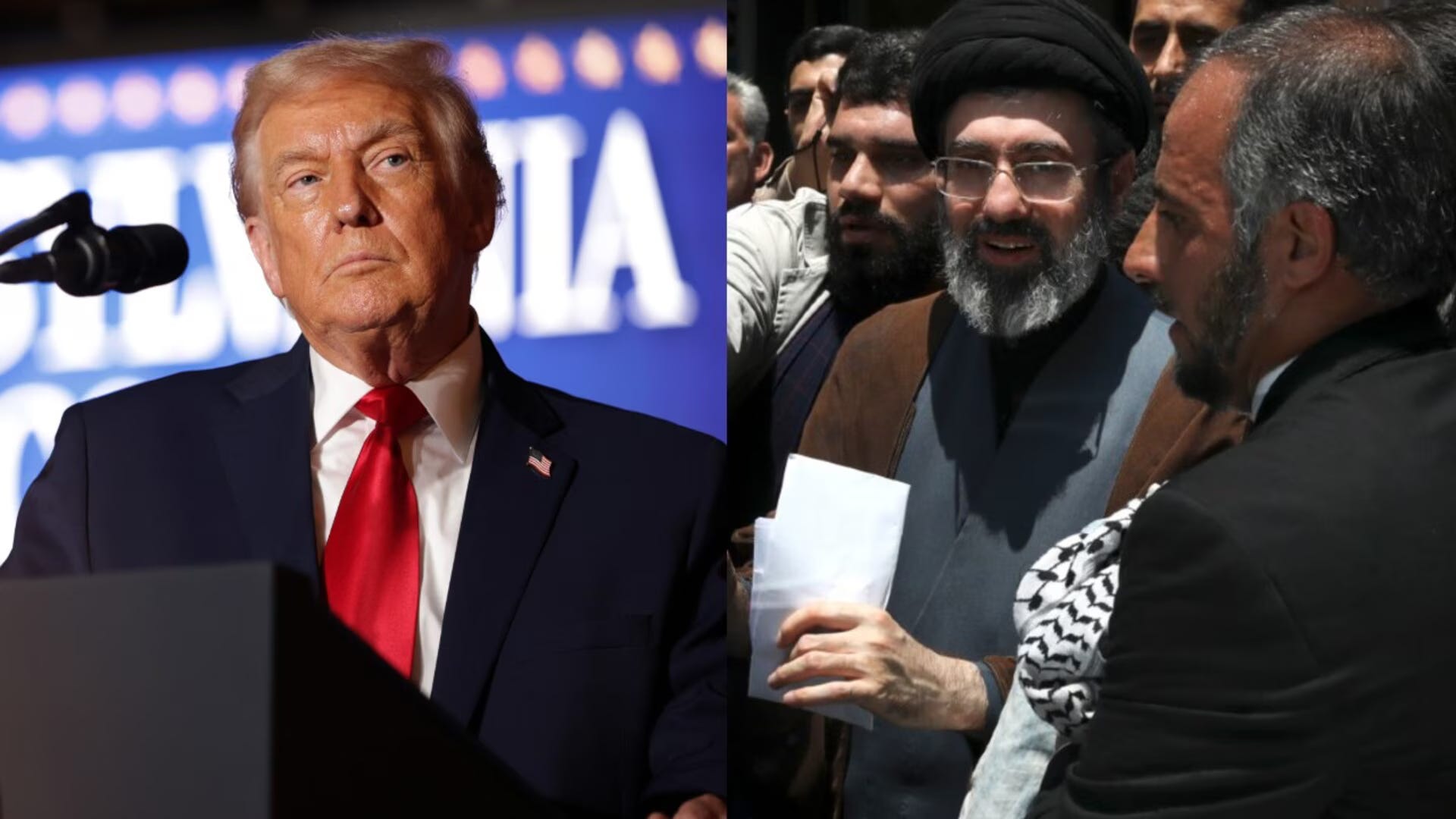
Despite the fact that previous AIPAC-influenced presidents avoided an invasion of Iran under the same pressure from Netanyahu, the very thought of it has long been seen as a terrible move. Iran is not a strategic threat to the United States, and military simulations dating back to the early 2000s have consistently shown Iran emerging victorious in any theoretical war—with the odds only improving for Tehran with each passing year. This point was not lost on Trump’s predecessors, who viewed the Joint Comprehensive Plan of Action (JCPOA) as the best available compromise. That connection to reality was lost under Trump. Chock-full of Miriam Adelson’s money, pumped up with sycophantic fantasies, and driven by a desire to enrich his family, he took Israel’s advice and fell into the trap he struggles with today.
As its primary declared mission—to remove the Iranian government at Israel’s demand—looks increasingly disastrous, the US may be trying to salvage its side-quest to corral the global hydrocarbon trade. As the reality of the disaster befalls the lucid dreams of those conducting it, the thrashing superpower is trying to justify its logic, or perhaps make the best of a bad situation. Whether this is a coping mechanism or a Hail Mary to regain primacy, it looks messy and sclerotic—and clearly due to the man at the helm. No Deep State reassurance or Beltway poker face can hide it.
The fact is, the mission is doomed by its design and its execution. A large power play of the kind some soothsayers describe requires real ability to execute—a question of doubt raised by German Historian Tarik Cyril Amar and others who struggle to see the pragmatism or skill of the deep state in carrying out such a feat with a “mad king” character like Trump at the helm. Amar suggests that the circus in the White House lacks the cohesion, comprehension, and clout to pull it off with “a commander-in-chief who is a madman”.
This “4D chess” claim being made about the current bunch in Washington—via Venezuela, Iran, and the global fuel supply—seems more like a mantra to help distressed deep-state decision-makers sleep at night and ignore the compounding reality: Trump is trashing the global prestige and capability of the US empire at a rate that cannot quite be comprehended.
Israel remains the decisive factor that denies any clean exit route. For all of Washington’s regional calculations, the optics of admitting defeat to Iran, and the domestic political cost of defying Netanyahu, continue to trap the administration in escalation. This leaves the United States juggling an impossible list of conflicting objectives:
Waging war on Iran to fulfil Israel’s dream of regional hegemony
Renditioning leaders like Venezuelan President Nicolás Maduro
Operating the Navy as a state-sanctioned pirate fleet to blockade trade routes and seize ships
Dismantling the Bretton Woods global order
Collapsing the energy independence of allies and adversaries alike
Constructing a blockchain-powered techno-feudal enclave in post-genocide Gaza
Imposing that same dystopian model — driven by Palantir and the military-industrial complex — on the rest of humanity
With so many balls in the air, juggled by the most deluded of clowns, the chances of dropping everything only increase. Behind every unit of US action now stands an equal or greater unit of reaction: in the asymmetric war with Iran, in economic competition with China, and in its unreasonable expectation of maintaining a unipolar grip over global decision-making. Trump is dropping the balls, and each one is being scooped up by more competent hands outside the circus.


As these Washington fantasies collide with cold reality — the folly of using war for political ends and the bankruptcy of a foreign policy dictated by Israeli interests — the United States will never recover its former heights. Overextended, unprepared, and unaware of what it wants to achieve from the situation it has created at the insistence of Israel, the US is now open to exposure from the great power competitors it hoped to somehow contain through its actions.
Trump’s invasion of Iran accelerated the death knell of the petrodollar, elevated Iran as a regional power, revealed the limited projection of its legacy navy, and demonstrated America’s inability to impose itself in faraway theatres of war as it once did. After an initial exchange with Iran that resulted in the decimation of billions of dollars’ worth of radars, bases, and forward operating positions, the illusion of American military dominance now lies in ruins.
This same overstretch is evident across the board. The US has handed most of the responsibility for its efforts in Ukraine to Brussels, leaving Europeans languishing in a quagmire. They remain trapped by a hardened, zero-sum insistence on prolonging a five-year war that has killed nearly two million young Russians and Ukrainians, while their economies crumble between the realities of conflict with Russia on one side and Trump’s belligerence on the other — shaking down Europe while decommissioning its ability to sustain economic interdependence.
Among the outer-core vassals—Japan, Australia, Argentina—this hissy fit, couched as a “strategic pivot,” puts them at greater risk than most. As Trump brandishes a double-edged sword that seeks to cut his enemies but swings back at his allies, he fails to deliver significant damage to the former and ends up taking out more of his frustration on the latter.
Desperate for direction yet devoid of a sovereign bone in their political classes, these outer-rim semi-client states have never looked so isolated. The Eurasian landmass is figuring out ways to circumvent US maritime chaos. Iranian crude is moving overland, Asian countries are seeking alternatives from Russia, and South America is exploring options that prioritise domestic fuel production. But the last die-hard adherents to the US seem destined to miss out and walk exposed into the impending US-created global crisis unprepared to face the same realities that baffle Washington, and further exposed to the drastic fallout.
Meanwhile, the entire global economy is at a standstill after more than two months of near-zero flow from roughly 20% of the world’s energy supply. Reports of market manipulation are ringing out, with credible sources tracing insider trading accusations back to individuals close to the White House. The price of oil has been suppressed on paper markets, creating a dramatic disparity between traded contracts and real physical supply. While Trump uses the Federal Reserve’s printer to manipulate markets and suppress crude prices, the Strategic Petroleum Reserve runs dry and America’s economic credibility collapses with it.
The fragile ceasefire has collapsed. Right on cue, the White House admitted it is “pausing Project Freedom” — its own operation to force ships through the Strait — while the blockade remains. What Trump sold as a masterstroke for Israel has become America’s Suez Crisis moment: a humiliating self-inflicted wound that didn’t have to happen this soon. This is the direct result of choosing dreams over reality, and pragmatic presidents and independent allies of the past would be shaking their heads in disbelief. Trump brought this fatal disconnect crashing down on the world, now nations on both sides of the collapsing American order must act accordingly. The empire is bleeding out in public.
Pirates of Hormuz

The current US blockade of the Strait of Hormuz, resulting from the escalation of the Iran war, is causing a global energy crisis with no end in sight. The International Energy Agency (IEA) has declared the situation “the biggest energy security threat in history.” With the …