
Pirates of Hormuz
America’s pirate policy and the making of a new global energy order.

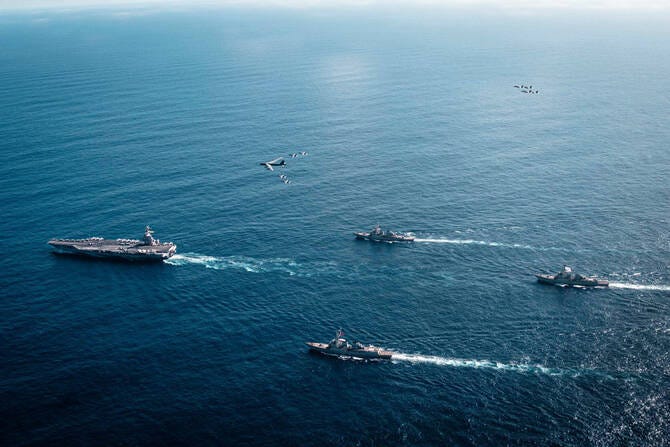
The current US blockade of the Strait of Hormuz, resulting from the escalation of the Iran war, is causing a global energy crisis with no end in sight. The International Energy Agency (IEA) has declared the situation “the biggest energy security threat in history.” With the current ceasefire period at an end and its participants at an impasse, this energy security threat is rapidly evolving into an energy security catastrophe not experienced in living memory. Could it be by design?
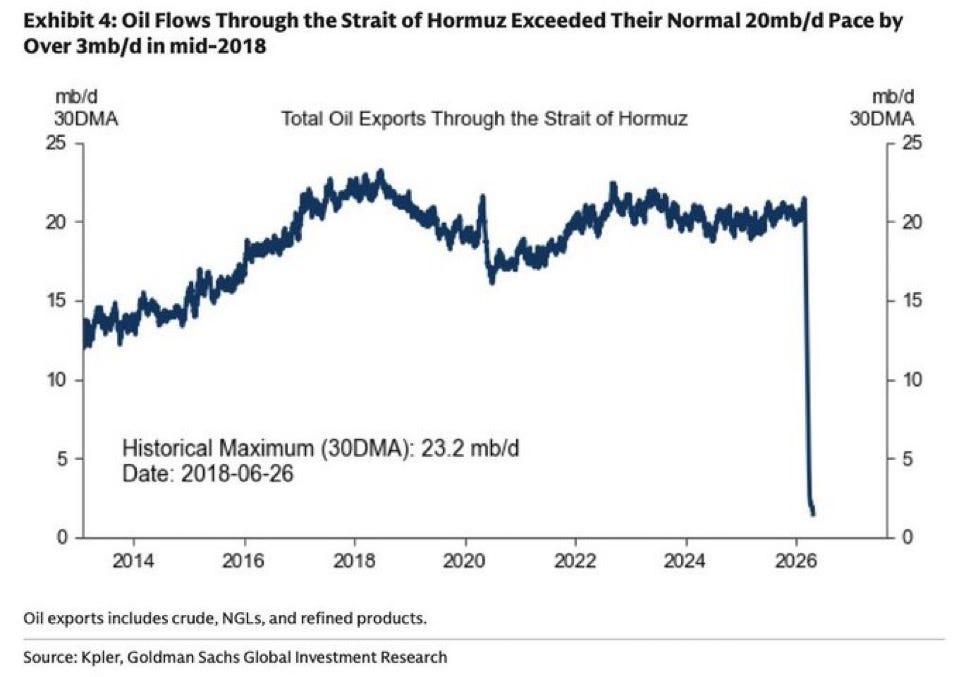
Since the beginning of the conflict on February 28, twenty-five percent of the world’s seaborne oil trade has been frozen in the Strait of Hormuz. An average of 20 million barrels per day (mb/d) has been lost to locked-in supply, compounded by a sharp drop in the capacity to produce liquid fuels.
As of late March, over 40 energy assets across the Gulf were reported as severely damaged. Some facilities saw temporary or partial restarts, but full recovery is expected to take months or even years due to physical damage, security risks, and logistical challenges. Even if the war ended tomorrow and the blockade were dissolved with full access restored, the IEA crisis would not be averted. The reality of this crisis — in production alone — has not been priced into the cost of fuel, nor has it been factored into the political calculus of governments around the world, which largely continue with business as usual.
The dirty world of hydrocarbons is making itself known again in the form of man-made scarcity. While Israeli-US objectives for the war are claimed to be motivated by preventing a nuclear Iran, there seems to be a reticence to acknowledge the global flow-on effects — and perhaps even a quiet embrace of them. As the entire global energy supply chain strains under the Gulf crisis, tanker traffic to the newly minted “Gulf of America” has tripled.
US fossil fuel net production has been on the rise thanks to increased exploration, drilling, and advances in the shale oil industry, which has seen the US technically become a net exporter of fossil fuels. The dream of a US energy monopoly has taken root and now forms a core part of the strategic calculus of US foreign policy. No longer does the US have to merely consider energy flows — it is now actively accelerating a more aggressive approach.
A country once obsessed with gatekeeping oil flows abroad is now looking to squeeze them in order to reroute energy supply chains around a new hydrocarbon order. As it locks the Strait of Hormuz, Washington is negotiating with Indonesia while eyeing the vital Strait of Malacca. Its ally Israel has recently doubled down on the ‘Isaac Accords’ with its firm partner Argentina, suggesting a potential reigniting of the Falklands dispute and the cutting of vital shipping lanes flowing between Tierra del Fuego and the tip of Antarctica. There has been a clear pivot in the way Washington views its place in the world — from conductor of global free trade to disruptor.
Sir Francis Drake made his name in the history books as the most famous of the British privateers. He led daring missions of plunder to the far side of the New World in the 15th century. Granted licence by royal decree to plunder Spanish treasure ships returning from the Americas laden with gold, Drake’s mission had been issued by Queen Elizabeth to contain Spanish naval dominance. By keeping the empire spread thin across its colonial domains and protecting its assets from state-sanctioned pirates like Drake, Britain eventually succeeded. The pirate activity paid off and was a major factor in the demise of Spanish naval dominance, culminating in the loss of the Spanish Armada at the Battle of Gravelines on August 8, 1588 — at the hands of the pirate captain Francis Drake himself. This set up a new era of maritime hegemony and state-sanctioned piracy for the British that lasted until the fall of Suez in the 1950s.
The Spanish never recovered from their defeat. The desertification of parts of the country under climate change today is partly linked to the vast forests felled for constructing the Armada in the 16th century. If we replace trees with oil and Spain with China, what is currently occurring in the war on Iran begins to make strategic sense. Spain’s lumber scarcity was ruthlessly exploited by the British. The Royal Navy declared a ‘war on trees’ that included cutting off access to vital Baltic timber, targeting shipments in the Caribbean, and controlling key trade lanes.
After plundering oil tankers off the coast of Venezuela before renditioning its sovereign leader to a supermax prison — heralding the definitive start of the “Francis Drake-era” of US foreign policy — what we see today should come as no surprise. Trump openly admitted he was targeting Venezuela for its oil and has made similar statements about Iran.
Washington has now sanctioned Hengli Petrochemical, China’s second-biggest refinery, in an attempt to disrupt China’s access to hydrocarbons. Eyes on Malacca and blockades on its seaborne energy flows are an open incitement, it has put pressure on Beijing directly, not to mention a high instance of critical energy infrastructure being damaged or incapacitated by incidents that seem too voluminous to be a coincidence. While the global energy supplychains freeze, and ‘the tank’s (clay) bed is glarin’, from March–April 2026, since the war with Iran has unfolded, multiple incidents disrupted global energy infrastructure.
Russia saw strikes on a major oil export terminal (Apr 3), a crude distillation unit (Apr 4), and another refinery (Apr 20). India reported deadly boiler explosions at a Vedanta power plant in Chhattisgarh (Apr 7 & 14) plus a refinery incident (Apr 21). Fires and explosions also hit Australia’s Geelong refinery (Apr 15), Mexico’s Pemex Olmeca refinery (Apr 9), Romania’s CET Vest power plant (Apr 21), and a Texas oil rig/refinery-related site (Apr 21). Earlier attacks targeted Iran’s South Pars/Asaluyeh (Mar 18), Kuwait’s Mina Al-Ahmadi refinery (early April), Qatar’s Ras Laffan (Mar 2), Saudi Arabia’s Ras Tanura (Mar 2 & 4), and UAE’s Ruwais (Mar 10). These events, linked to geopolitical tensions, raised serious concerns over global energy supply stability.
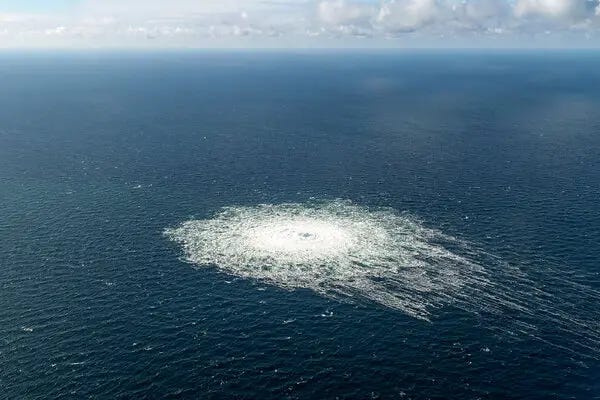
While it may be too early to make definitive claims about the nature of these events or whether they are linked to something more sinister, the sheer number of incidents alone is worth documenting. This pattern is worth noting in the context of this return to pirate activity, where the most audacious and diabolical plots are schemed.
Some pundits are pointing to signs of a war for control of the world’s hydrocarbon supply chains, and all of these factors could be used to fashion a cogent argument in support of that claim. All roads lead to a strategic contest with China. The US now realises it cannot compete with the Chinese economic engine, Chinese innovation, and China’s domestic manufacturing capability. It is therefore looking to compete where it still holds an advantage — in the domain of energy dominance and naval power, and all the pirate activity that comes with it.
While China may be rising in many areas of innovation and technology, the US is using its still superior (TBC) blue water navy and its adopted pirate policy as a hedge against traditional strategic and economic peer competition in the global market it once dominated.
There is a reason previous US presidents refrained from this scenario in the Gulf. Difficult conversations and JCPOA-shaped documents reflected that restraint. The deviation from this script we see today in Washington is one part Trump, one part Israeli pressure, and one part opportunism. The status quo of blockades and stalemates would have been factored in, and somewhere within Trump’s warped Clausewitzian triangle, Washington sees an opportunity in sending the world into the biggest energy crisis in history.
Middle powers will have to make a choice, because what comes after Trump will not be much different — Democrat or Republican. Revelations of Biden-era support for an Iran incursion, and decades of bipartisan musings over a defanged Venezuela, are all part of the political lexicon in Washington. AOC would likely be as much of a pirate president as JD Vance. Decades of unipolar exceptionalism and self-marination in the champagne of hegemony have manifested in disruptive and brutal global incisions under each party’s version of “America First.” In the end, it is really just plain old piracy.
In the end, what is unfolding in 2026 may not be an accident of war, but the deliberate reassertion of an old logic: when economic and technological supremacy slips away, naval power and control of chokepoints become the final arbiters. Whether this new Francis Drake-era succeeds in reshaping the global hydrocarbon order remains to be seen. What is certain is that middle powers can no longer afford neutrality in a world where the flow of energy itself has become the battlefield. The age of unipolar convenience is over. The age of open maritime contest has returned.
Even outside of the Iranian and Ukranian conflicts, that is an extrordinary number of carbon based energy assets around the globe that have had unfortunate accidents in recent times. Most curious.
Great article Joel. “The method in the madness” saying sure comes to mind sure stand up after watching Medhurdt’s short doco. I’ve sent it to everyone I know.
“You couldn’t make this shit up” is another saying that comes to mind. … but here we are. Plenty of food for thought eh.
Directly or indirectly, this also. solidifies the anti climate change stance of Trump et al and starts to look like a win/ win scenario.
As a late great friend used to say “Man is a cunning beast” Cheers.