
One assassination, a thousand missiles, many outcomes
How a pre-emptive strike on Iran’s Supreme Leader ignited a regional firestorm.

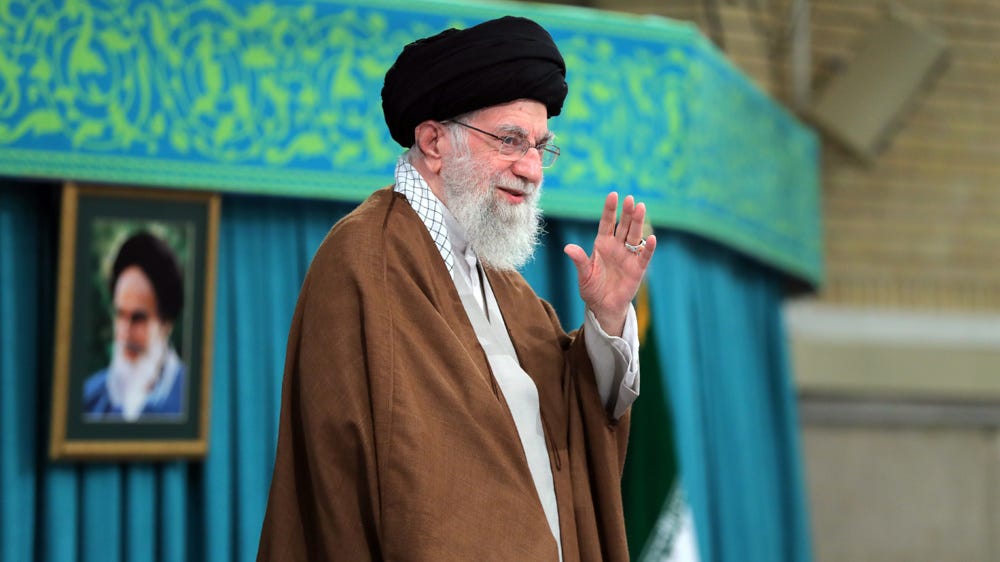
From the moment of the pre-emptive Israel-US attack that included assassination strikes on Supreme Leader Ayatollah Khamenei, there has been a strong response from Iran, which has deemed the action an existential threat and is responding accordingly. Media blackouts in Israel have been echoed throughout the West, with varying reports emerging amid the chaos; this article will attempt to objectively delineate some of the developments, drawing on perspectives from all sides.
Since firing the opening salvo that killed Ayatollah Khamenei and reportedly 180 killed (mostly schoolgirls) at a school in Tehran, the Israel-US coalition has been hitting targets inside Iran with a continuous volley of cruise missiles and airstrikes. The Institute for the Study of War (ISW) has claimed the Israel-US coalition has launched over 2000 strikes, gaining air superiority over parts of the country.
Although the US and Israel have conducted successful missions with aircraft and cruise missiles, Iran has managed to use its ballistic missile arsenal to effect, striking targets throughout the entire region. After a fierce opening stanza that is already having a dramatic impact on global stability, Tehran has officially announced that it will not negotiate with Washington, plunging the region into an uncertain future.
Scenes reminiscent of Baghdad in 2003 were beamed out of Tehran, where intense missile attacks blew smoke and rubble into the skyline of the city. US officials maintain the strikes target military sites to prevent nuclear proliferation, although +555 civilian casualties have been reported in Iran, and some of images of the tell a different story.
Iran has targeted multiple countries in response, including military installations of the United States throughout the Middle East, and constant attacks into Israel. Military bases, industrial zones, luxury hotels and high-rises, and energy infrastructure in the region are either damaged, destroyed or being evacuated; airports and shipping lanes are closed.
The valuable Leviathan gas field is closed, Qatar Energy has just ceased its LNG production, Aramco’s refinery in Ras Tanura, Saudi Arabia, has been hit, the Straits of Hormuz is shut, supply chains and resource pipelines disrupted—the lives of millions impacted, economic and energy security everything now uncertain. The fallout from a war that sees a primary global energy and trade node at a standstill, coupled with poorly defined objectives from incompetent and contrarian voices in Washington and Tel Aviv who prosecute the war, and a defiant Iranian regime preoccupied with preserving its very existence, spells disaster for a world simmering from half a decade of pandemic, economic strain, climate crisis, genocide and war.
Scenes of high-powered explosions in the UAE, Qatar, Bahrain, Saudi Arabia and Kuwait as Iran’s retaliatory strikes continued, demonstrating a capability to project force with drones and missiles that has been sobering to observers. The Iranian strategy has been to engage the Gulf states with the aim of economically and politically destabilising the fragile political and economic environment in the region.
Media blackouts have not stopped the reports of incredible damage in Tel Aviv, Haifa, Beit Shemesh and Jerusalem, Israel. Among footage of powerful ballistic and hypersonic missile strikes, Israel has responded by attacking Lebanon and increasing its strikes on Iran, and the US seems to be moving the goalposts while it comes to terms with the enormity of its uncertain endeavour, as the omnishambolic aspects of this conflict come into play.
A flustered Secretary of Defence Pete Hegseth, who addressed US media as news of dead US soldiers was trickling in, would not provide any timeline for the conflict, nor rule out boots on the ground. Hegseth spoke about a protracted war: “No stupid rules of engagement, no nation-building quagmire, no democracy-building exercise, no politically correct wars,” snapping at reporters, before handing over to a top brass who spoke the same thing in a less excited tone.
Recent sackings from the joint chiefs of staff, leaks, and the dangerous exposure of US assets in the region are emblematic of the schism in Washington. Developing rifts between Trump and Vice President JD Vance beget rifts between the Pentagon and the White House, and from a few more angles than one; this war looks like a bad decision.
Footage of Iranian missiles evading multiple interceptors has been a common sight early into the conflict, and already there are concerns over reports of insufficient interceptor stockpiles, backed up by leaked statements about unpreparedness from the Pentagon. Retired Admiral James Stavridis suggests Israeli-US munitions and air defence stockpiles are running low, and it begs the question: why would an aggressor low on missile defence measures choose to attack a regional power in their home territory that has built its defence on mass-produced missiles and drones in the first place? Secretary of State Marco Rubio seemed to hammer the final nail in with an astonishing admission: “They are producing, by some estimates, over 100 of these missiles a month. Compare that to the six or seven interceptors that can be built a month.”
Along with Iran’s modern drones and its numerically superior missile stockpiles, Tehran has now acquired BeiDou navigation and hypersonic anti-ship missiles from China. And while the US lumps in with another regime-change-style war without changing the broken formula, the scope and variety of Iran’s response is based on a generational leap in low-cost military technology and a well-constructed strategy that has been preparing for this situation for decades. While the beleaguered empire in the United States scrambles around hemispheres to maintain its unipolar hegemony on the world, Iran has been focusing on building its entire military strategy around repelling this very attack.
Iran is a unique military power, in that it relies on its large arsenal of drones, ballistic and hypersonic missiles for deterrence, as opposed to other nations that use land, air and sea power to project force. In military simulations against Iran over twenty years, the US has been exposed for its “vulnerability to low-tech warfare”, and now it is faced with a modern, cutting-edge war against a nation united by the killing of its religious leader that has been at the frontline of hypersonic missile and drone technology.
The people in Iran, whom Western leaders say need to be liberated from tyranny, have turned out in massive pro-government demonstrations, galvanised after being attacked several times in the last 12 months and united by the death of their Supreme Leader. Scenes of solidarity show crowds in their tens of thousands in Yemen and Kashmir, in Lebanon, Bangladesh and Iraq. The Shia majority in Bahrain is on the verge of uprising, riots have occurred in Iraq, embassies and consulates have been stormed in Karachi. The murder of Ayatollah Khamenei, who was a sacred and papal-like figure for millions of Shia Muslims, has not weakened the Iranian regime as the Trump administration hoped, but kicked a hornet’s nest across the Muslim world.
At the moment, the Middle East is wrecked, Tehran and Tel Aviv are smouldering, and dead civilians along with the grinding halt of international trade represent the cold reality of this war. A discombobulated US strategy with no-end-in-sight is being met with statements about ‘Decentralized Mosaic Defense’ from Iranian officials that speak of multiple succession plans, decentralised leadership, and cells that can act independent of centralised command. A post on X by Iranian Foreign Minister Seyed Abbas Araghchi confirms this strategy, stating: “We’ve had two decades to study defeats of the U.S. military to our immediate east and west. We’ve incorporated lessons accordingly. Bombings in our capital have no impact on our ability to conduct war.” A war that seems to be developing momentum in ways both parties cannot ultimately control.
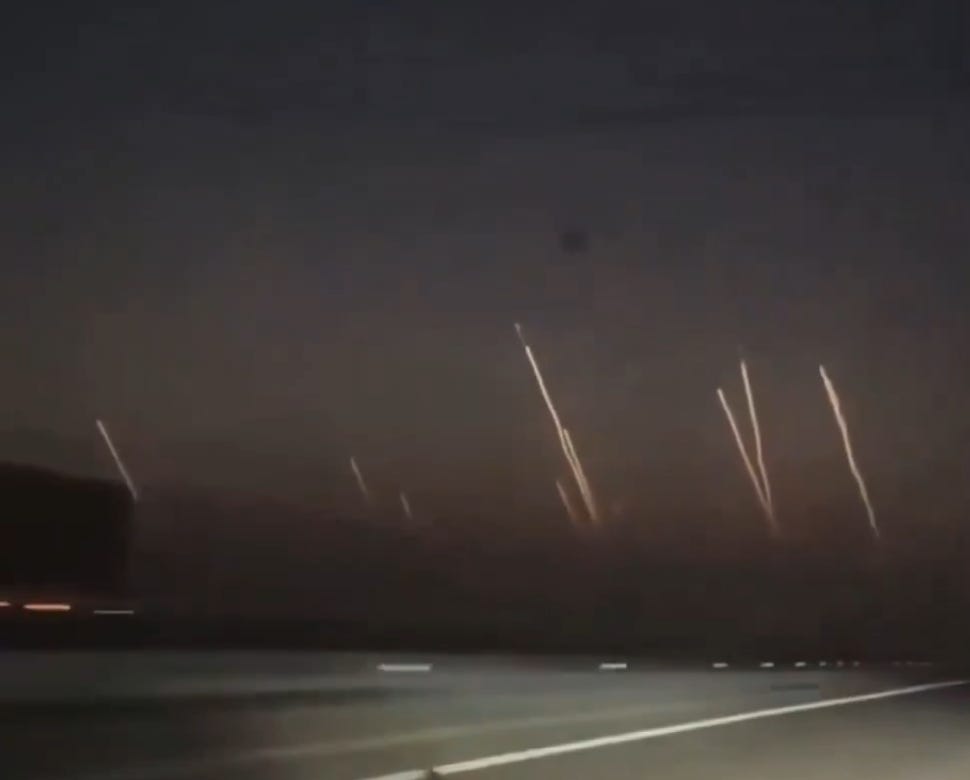
Footage of a US evacuation from the UAE and the redeployment of forces accompanied a claim from Saudi Arabia that America has abandoned them in defence of Israel. Saudi political analyst Suleiman Al-Aqili spoke on Al Jazeera: “America has abandoned us, and focused its defence systems on protecting Israel, leaving the Gulf states that host its military bases at the mercy of Iranian missiles and drones.” Israel, a nation with no resources that hosts no US base like the Gulf states, and ultimately offers no financial benefit to the US citizen, is now being seen to receive US protection at the expense of the Gulf states—who have gifted royal jumbo jets, real estate contracts and investments to the United States—now left isolated against the wrath of Iran’s retaliation.
After the assassination of Khamenei and the string of pre-emptive strikes that preceded it—from the assassination of General Qasem Soleimani in Trump’s first term to the extrajudicial killing of an IRGC spy chief in Damascus by the IDF—decapitation strikes have not had the effect of toppling the regime. And now, after pushing Iran to an existential war, the United States, its arbiter Israel, and their limited number of overt supporters including Australia are faced with a sclerotic and protracted war against a modern (pissed-off), existentially threatened, asymmetrical opponent fighting on its home turf. What’s next?
The US-Israel pre-emptive operation against Iran, launched on 28 February 2026, has eliminated Supreme Leader Ayatollah Ali Khamenei and inflicted substantial damage on military and nuclear-related infrastructure through more than 2,000 strikes, securing partial air superiority over key areas and delivering devastating attacks in Iranian territory. Iran’s response—hundreds of ballistic missiles and drones targeting Israel, US bases across the Middle East, and Gulf Cooperation Council states—has produced significant casualties, widespread infrastructure disruption, and critical energy shocks, continuing in volume to this very moment. Global oil prices have risen sharply, with European gas markets experiencing extreme volatility. Hezbollah has joined the conflict, and regional protests have intensified. That is a lot to take in. As the operation heads into its first week, US officials fluff around on a projected duration to neutralise threats, while the United Nations and several governments call for immediate de-escalation. The conflict’s trajectory remains uncertain, with risks of broader regional involvement and severe economic consequences seeming inevitable.
Shame on Albanese, Wong and their fellow-travellers in the ALP. The indignity of their rushed response in support of an illegal war with no justification in either self-defence or emancipatory prospect had all the hallmarks of the snivelling imperial crony.
Gough’s legacy has been systematically trashed for no good reason under this regime of weaklings.
We have known the US and Israel have been hungry for this war for a long time, and we know how spineless Albo and gang are, their brainless support of this illegal war leaves me speechless.