
Cup of Strife
Exclusion, humiliation, death — and the end of sport as we knew it.

The 2026 World Cup has become a Cup of Strife — a tournament marred by politicisation, exclusion, profiteering, and hypocrisy that has turned what should be a celebration of global unity into a symbol of division and imperial aggression. Hosted by Mexico, the United States, and Canada at a time when the globe is gripped by a polycrisis largely caused by one of the hosts, the event has exposed the collapse of sport’s neutrality. The USA, as the dominant host, is directly in conflict with guest nation Iran, threatening confrontation with co-host Mexico, while FIFA has surrendered its principles, allowing the tournament to descend into an unwelcoming fiasco that may mark the beginning of the end for truly global sporting events.
Dynamic ticket pricing and manufactured scarcity are nothing short of a total disgrace, stripping ordinary fans of access to the world’s premier tournament and transforming it into an elitist spectacle reserved for the wealthy. For the first time in World Cup history, FIFA embraced a real-time dynamic pricing model — similar to airline tickets or concert resale platforms — that has driven prices dramatically upward based on demand. Cheapest Category 3 tickets for the final have exceeded $5,000–$6,000, with some resale listings reaching an obscene $2.3 million. FIFA stands accused of deliberately creating artificial scarcity by releasing tickets in limited batches while profiting from its own official resale platform, which takes a 15% cut. The result is widespread exclusion of working-class fans and growing investigations by US attorneys general into price manipulation.
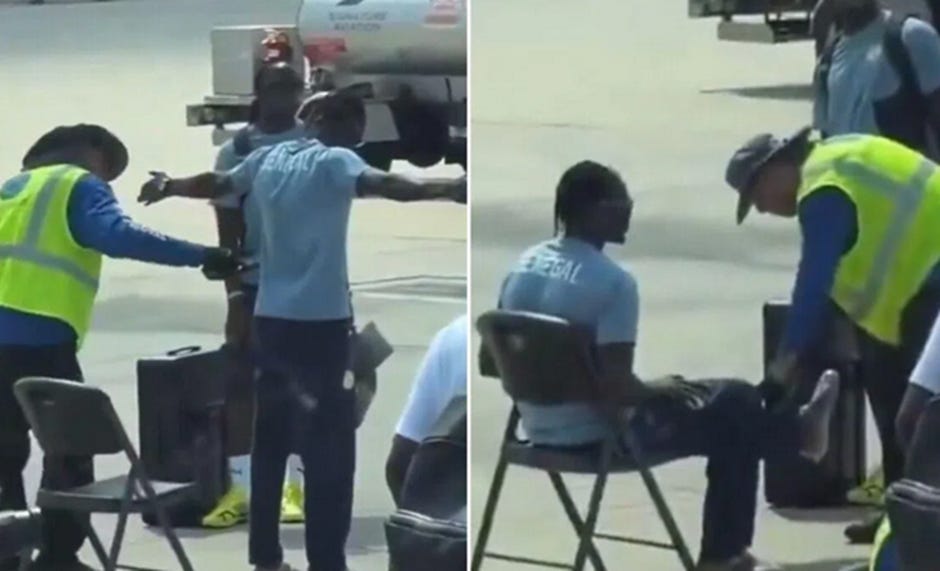
Then came the treatment of the players and officials themselves. The Senegalese and Uzbek national teams faced thorough searches. Iraqi star striker Aymen Hussein was questioned for seven hours in Chicago, and the national team photographer was detained for over 10 hours and denied entry despite holding a valid visa. Delegations from Africa, the Middle East, and Central Asia received similarly harsh treatment. There is no precedent for such handling at prior World Cups.
Palestinian Football Association chief Jibril Rajoub was denied a US visa despite holding official FIFA accreditation, preventing him from attending key World Cup events and leaving him stranded in Mexico City after attending the opening match between Mexico and South Africa. As head of a FIFA member association, Rajoub’s exclusion stands as a stark contradiction to the tournament’s supposed spirit of global unity and inclusion — especially since the Palestinian team, though not qualified, typically sees its federation leadership invited to such celebrations. This denial echoes earlier incidents, such as Palestinian officials being barred from a FIFA Congress in Canada, highlighting a pattern of restrictive US immigration policies targeting Palestinian representatives amid heightened geopolitical tensions.
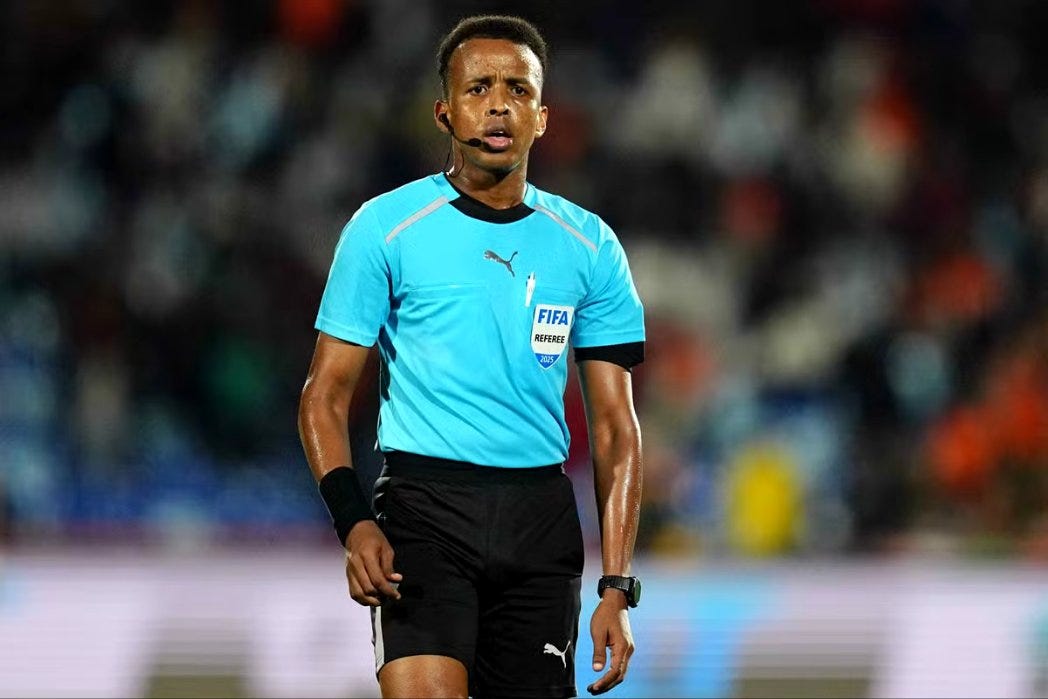
Another glaring example of harsh treatment involved Somali referee Omar Abdulkadir Artan, Somalia’s first potential World Cup referee. Despite holding a diplomatic passport and full FIFA accreditation, he was detained for 11 hours by US authorities over alleged “vetting concerns” linked to suspected terror ties. He was ultimately denied entry, removed from the refereeing panel, and sent home like an undesirable criminal.
These incidents have drawn sharp criticism toward both the host nation and FIFA for failing to secure basic guarantees. Human rights groups had warned about racial profiling and intrusive searches, yet FIFA President Giovanni Infantino offered only flippant responses. When asked if FIFA had adopted a passive approach, Infantino said, “We cannot dictate to the U.S. government,” “we are not the kings of the world,” and “sometimes it is better to ‘chill and relax’.”
But that has never been the case. FIFA has traditionally forced accountability on any host daring to politicise the tournament. In the 1966 World Cup in England, the host nation tried to deny the North Korean team access, only for FIFA to strongly intervene and threaten to relocate the entire tournament if any qualified team was barred. England complied. In the 2018 tournament in Russia, the host nation changed its visa laws to introduce a “Fan ID” system that allowed temporary visas to foreign fans — even those with tenuous relationships with Moscow. Russia even complied with serving Budweiser beer at matches. This showed that even a geopolitically isolated host could deliver a successful tournament — miles ahead of this unwelcoming fiasco in the supposed land of the free.
If it weren’t for Mexico, which has dared to represent the true spirit of the tournament, the 2026 World Cup would stand as the most infamous and debacle-clad tournament in history. Combined with profiteering, exorbitant ticket prices, and the general American indifference toward the event, it looks set to remain that way no matter how good the football is.
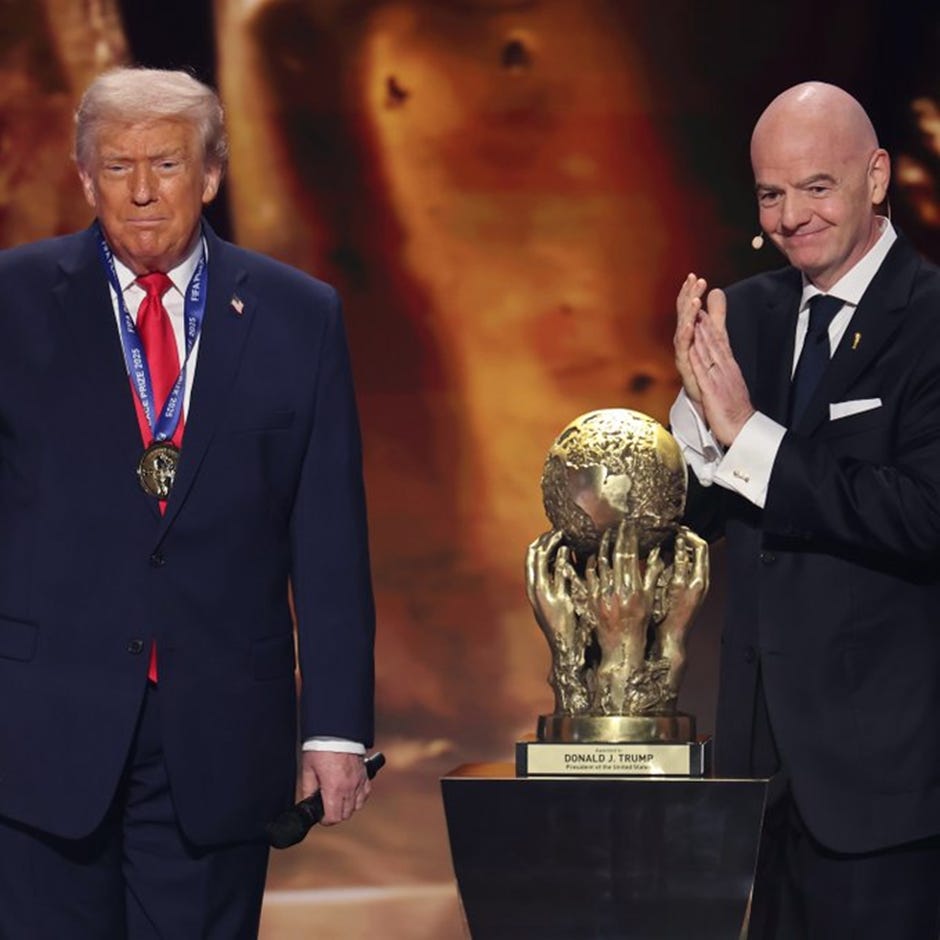
Infantino has embraced this Trump-flavoured event with enthusiasm, signalling his imprimatur by conjuring the inaugural FIFA Peace Prize and handing it to a dejected Trump, who complained he had missed out to Venezuelan opposition figure María Corina Machado. Infantino has cradled the narcissistic US President like a baby as his bombs and bullets kill soccer players and his foreign policy destroys soccer stadiums. In doing so, he has destroyed the essence of the tournament — already battered by the last edition hosted on the bodies of hundreds of dead overworked foreigners in Qatar’s dictatorship — and hammered another nail into the coffin of viable global sporting tournaments going forward.
Not since the 1936 Berlin Olympics has a global sporting event been such a political football — and even then, Berlin pales in comparison. The Nazi government hosting the Olympics was keen to draw world attention to a rebuilt and recovered Germany, seeking to showcase economic growth and Hitler’s vision of German revival. Behind the scenes, however, the country was enacting one of the most draconian crackdowns on minorities and dissidents. The IOC ignored boycott calls and accepted Nazi assurances, despite the Nuremberg Laws banning Jews (passed the year earlier), the already operational Dachau concentration camp, and the globally reported “Night of the Long Knives.”
FIFA has now said “chill and relax” about similar concerns regarding the state of the USA after ICE squads rounding up people with certain skin colours and reports of soccer moms being shot in the streets.
Hitler temporarily removed antisemitic signage, hid away the Gypsies, and obscured the worst abuses while continuing arrests, camp operations, and planning for expansionist wars. Trump, by contrast, has banned Muslims from entering the country, renditioned the Venezuelan president, armed and supported Israel’s genocide in Gaza, and is conducting a war against Iran that is collapsing the global economy. He has hidden nothing — and the USA is more openly involved in this overt bloodlust and carnage than Hitler’s Olympics ever was. It’s worth thinking about that.
In the streets of Berlin, people from nations across the world walked around a country that masked its ominous authoritarianism. No Africans were strip-searched on the tarmac, no officials were denied access because of their country of origin, and ticket prices were reasonable. Trump’s cup seems less inclusive on the surface.
Though no stranger to being a political football, the decline of global sporting tournaments has progressed incrementally for over a decade. The politicisation of sport now meets the subjective intentions of the Western hemisphere that hosts the sporting bodies — and now executes the aggression, or at least pardons it.


The 2026 World Cup will not be remembered for goals or glory. Russians cannot compete under their flag. They are now banned from the World Cup. Meanwhile, the Palestinian football team lies dead and limbless — more than 421 footballers killed since October 2023, including promising talents like Suleiman al-Obeid, known as the “Palestinian Pelé,” with entire youth squads and generations of players erased. Stadiums reduced to rubble, training grounds turned into graves. The Iranian national stadium lies in ruins from US airstrikes, and no one remembers or cares who won the 1938 World Cup (Italy 4–Hungary 2). They only remember what came next.
From Berlin 1936 to America 2026, global sport has been reduced to a political football. What began as a festival of unity has become a tool of exclusion, profiteering, and imperial power. FIFA’s surrender, Infantino’s “chill and relax” indifference, and the host’s aggression have delivered one of the final blows to the beautiful game as we once knew it.
It’s Eurovision. It’s chess tournaments. It’s every arena that can be weaponised for political ends. This is not just the decline of the World Cup — it is the end of global sport as we have known it.
There is only one moral response to the desecration of the beautiful game by trump/Israel and his enablers and that is to boycott all interaction as a fan as an official as a player as an association as a country and as member of the human race.
As always happens when money becomes more important than tradition, the 'Greatest Game' has become the big corporate wallet.
Something that was meant to bring the World together has been corrupted beyond repair.
The same thing has happened to the Olympic Games as well.
So very sad.