
The thin end of the wedge
The Albanese government decision to send Australian military assistance to the UAE is as open ended as the objectives of the architects of the war, highlighting the potential for further involvement.

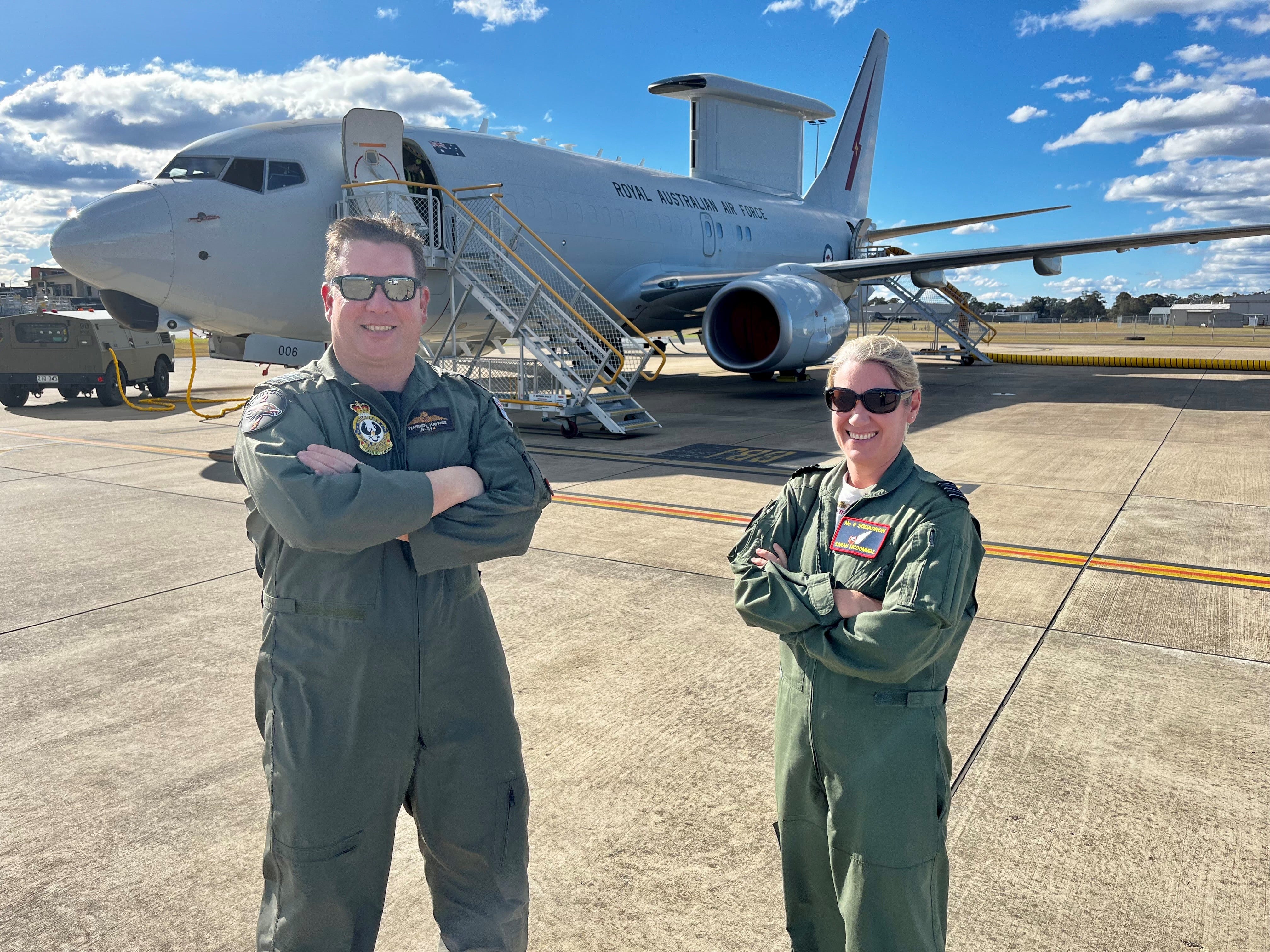
Albanese spoke of ‘collective self-defence’ when he announced 85 Australian defence personnel and Australian military assets would be embarking on a mission to aid the United Arab Emirates (UAE) to assist in its defence from Iranian attacks as it responds to the Israel-United States attack that began the conflict. The government announced those personnel were to deploy on an E-7A Wedgetail aircraft, along with the transfer of Advanced Medium-Range Air-to-Air Missiles (AMRAAMs), in a further direct involvement in a theatre of war that is evolving beyond the parameters of the ill-equipped decision-makers in Canberra. The government has stated that this limited support is intended to counter Iranian missile threats to the UAE and help maintain regional stability against escalating aggression.
The Deployment Decision
Lurching forward with a poorly defined level of support, based on poorly informed ideological decision-making since early Australian involvement in the sneak attack on Iranian warship IRIS Dena as it left military exercises in India, Australia is one of the few nations to offer such comprehensive military support. Apart from former colonial powers, UK, Italy and France, and bellowing from the war footed Ukraine, Australia is the only other outlier contributing such substantial commitments to the conflict. While most nations are being shaken down for THAAD systems, or spare PAC-3 (Patriot) missiles--and are choosing to let the phone ring out on calls to join the conflict-- little Australia is jumping up to be picked in Captain Americas footy team.
The E-7A Wedgetail is one of Australia’s highest-cost military platforms, serving as the centrepiece of the Royal Australian Air Force’s (RAAF) national air defence and battle management capability. The Wedgetail is a highly capable AWACS platform acting as essentially a flying radar system that can track hundreds of live targets over hundreds of square kilometres, providing vital command and control data information that feeds into military operations throughout the battle. With six of these aircraft in our possession, they are used to monitor vast maritime and air domains for potential intrusions or escalations.
The Wedgetail mission itself—to aid in the collective defence of the UAE—will involve providing airborne early warning and long-range reconnaissance, providing real-time situational awareness along with data sharing, and filling surveillance gaps—gaps caused by Iranian attacks that have created them. The Wedgetail’s arrival to the Gulf comes as the UAE has rumoured to have lost a similar advanced early warning and air surveillance aircraft, Saab GlobalEye, that was reported to be destroyed in its hangar on the tarmac. With the war currently waging for control of the eyes on the battlefield, advanced early warning and air surveillance aircraft like the Wedgetail become prime targets, and with reports of multiple large military aircraft being successfully struck in an increasingly undefendable battlespace, the decision seems like a bad one.
Risks of Escalation
“This could be the thin end of the wedge,” noted Retired ADF Major Cameron Leckie on the Bogan Intelligentsia podcast, who points to the Vietnam War, where Australia first committed training teams before peaking at three battalions as the war ground onwards. Major Leckie notes the risk that any Australian deployment to the Gulf could be used by the government to justify further involvement, noting cynically that a “tethered goat” scenario, whereby any harm to the Wedgetail and its crew could provide a casus belli that leads to further involvement, could not be ruled out as a factor behind the decision.
The decision has come barely months after Albanese and UAE President Sheikh Mohamed bin Zayed Al Nahyan issued a Joint Declaration elevating the relationship to a Strategic Partnership in September 2025, and is perhaps an example of that agreement in action. The agreement slipped under the radar during a diplomatic excursion that was fraught with more genocidal considerations during the human catastrophe by Israel in Gaza, and escaped the scrutiny it deserves. With a term and a half of supporting AUKUS and Israel under their belt, and previous support for the UAE’s massacre in Yemen, it should come as no surprise that we are witnessing this decision to commit Australians to another warzone.
The United Arab Emirates (UAE) often portrays itself as a beacon of modernity, tolerance, and humanitarianism in the Middle East, but this masks a reality of domestic repression, support for divisive armed groups abroad, and systemic exploitation of migrant workers. The UAE has armed, funded and backed brutal conflicts and foreign interventions that include the humanitarian crisis that was called the War in Yemen, the destabilisation of Libya, and the funding of brutal separatist groups like the RSF in Sudan. The Albanese government decision to enhance its military relationship with the UAE has come after all of these developments, and reflects a diplomatic callousness that sharply departs from the ALP’s traditional claim to support human rights.
Australia’s deep military integration with the United States has seen it repeatedly drawn into wars of aggression, and calling the current conflict with Iran unrelated to US interests is folly. From Cold War contributions in Korea, Vietnam, Malaya, Burma, and Indonesia to ongoing support in Iraq, Afghanistan, Syria, and Yemen, Australia has provided lethal aid, components, or direct involvement in conflicts across the Middle East and beyond. The thin end of the wedge is visible here once more: what begins as a “modest-sounding mission” of collective self-defence for the UAE mirrors Vietnam’s early advisory role, where small deployments were framed as limited and defensive before they escalated into full-scale war. A callous byproduct of being so closely tethered to the US—especially under Trump—is that Australia is further inclined to be dragged into its messes abroad. With a cohort of bipartisan career politicians who have outsourced sovereign agency to Washington, the country careens ahead on an outdated US autopilot, hoping our ally will hit the brakes as it laughs maniacally with the foot on the accelerator.
Consequences and the Call for Sovereignty
Gone is the muscle memory of a more complete national vision that included diplomacy and independent decision-making; the once rugged Australian semi-independent approach has atrophied in the shopping-mall mentalities that now pervade the neoliberal Canberra bipartisan blob. That pattern has seen Australians fight and die in another hemisphere for over half a century, and it sees us doing something strikingly similar now.
As Palantir gain laminated keypass access to our defence offices, Tony Burke has agreed to sell off our biometric data to ICE and DHS in America—US defence contractors are given top secret status, US bases are being expanded, and US interests are being ensured even when they defy the laws that govern us. Foreign Minister Penny Wong talks sheepishly about Australian spy bases being used in targeting in Iran, the PM shoegazes about the nature of the forward deployment of the Wedgetail to the Gulf, Kevin Rudd hosts rambunctious US Senators and offers them access to trillions of super investments, and in all their entirety, these activities cant be mistaken for anything other that the total sovereign acquiescence of Australia.


The decision-makers in Canberra may feel that they are playing 4D chess, and could think that knocking back a more consequential request for naval deployment is a firm middle ground that they have toiled for, enabled by aiding the UAE via permission from Washington. Australians polled are overwhelmingly against the war, and any government commitment to dispatch a naval mission to free the Straits of Hormuz, and many are horrified at the Australian involvement in the sneak attack on Iranian warship IRIS Dena. The political considerations that guide the calculations of Canberra look just as horrifying.
This whole war is for Israel, the first war of its size fought for a foreign nation’s objectives in its own region. The US has aided Israel in its expansion aims, arming it, and now fighting for it, to achieve them. US President Donald Trump has said so himself. The escalation politics that leaves US decision-makers vulnerable to escalation is also applied to the core allies (vassals) of the US imperium like Australia. The tricks and snares of the escalation trap, that falsely thinks overwhelming force converts to success on the battlefield, lures in the frenetic belligerents, especially as they start meeting resistance.
We are not allied with Israel and our mutual defence pact with the UAE is something we only put on paper months ago before we started, yet we forge ahead into the unknown, driven by a bipartisan engine in Canberra. Have they learned from Iraq, Afghanistan, from Vietnam or Korea? Do we not deserve better leaders who can? At not one point has Albanese or his cabinet condemned the Israel-led war for regional hegemony, nor has it applied its weight as a middle power on the earth to urge for de-escalation; in fact, it has been the most vociferous ahead with the strongest words of condemnation towards Tehran.
The consequences of a rushed and poorly planned regional war aggressively started by an Israel-United States coalition are starting to be felt at the petrol bowser and the shopping till in Australia. As our sovereign fuel supply policies and our domestic resilience come under strain in this dark time, never before has there been an opportunity to explore a more prudent approach to our place in the world. Now would be the most reasonable time to cast a critical sovereign eye on what’s happening around us, like many other nations are, to recast our view on what’s important. It could be a good time to stop being a junior partner and start being sovereign: Canberra lumps into another Israel-US war. Australians deserve better.
Canberra silent-running towards Armageddon

The Prime Minister Anthony Albanese smirked when he confirmed the involvement of Australian submariners onboard a US submarine that torpedoed an Iranian warship (IRIS Dena) returning from neu…
Thank you for this.
Totally crazy decision making again on behalf of the Albanese government. Now we are actively providing material support to two different regimes carrying out genocide on two continents, Israel and UAE. Both of these regimes have ongoing cases charging them with genocide at the International Criminal Court, and Australia signs on board willingly to both offensives. Shame on the Australian government, shame on the Australian Labor Party, your actions are making Australians less safer.