
David McBride goes home
Whistleblower walks free after 27 months behind bars.

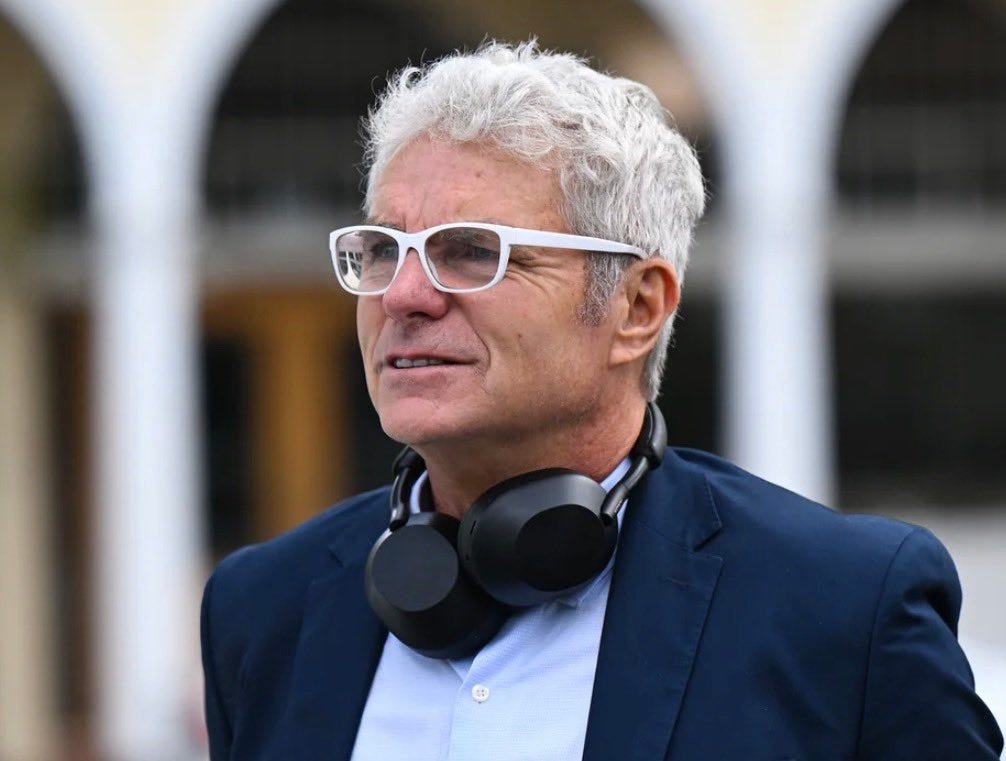
Australia’s most high-profile imprisoned whistleblower David McBride was subject to the decision of Federal Attorney-General Michelle Rowland, who heard his fate and decided he would receive parole. He walks free from prison.
Sentenced to five years and eight months in prison in May 2024 for pleading guilty to charges of theft of Commonwealth property and unauthorised communication of naval, military or air force information after providing classified documents to journalists, McBride had reached the close of his 27-month non-parole period, and today found out it was the end of his incarceration.
The nature of McBride’s federal charges meant he was not entitled to go before an independent parole board; and the decision on his fate sat with the Attorney-General.
These documents he was imprisoned for leaking reported allegations of war crimes by Australian special forces in Afghanistan. A subsequent inquiry found credible evidence of unlawful killings.
Attorney-General Michelle Rowland granted David McBride parole effective immediately after he completed his non-parole period. He was released from the Alexander Maconochie Centre in Canberra under standard parole conditions including reporting requirements, approved accommodation, and restrictions on overseas travel. The Attorney-General’s office confirmed the release followed consideration of his conduct in custody, low assessed risk to the community, and the completion of the minimum term set by the court.
McBride has embodied the deterioration of free Australian society — emblematic of a dramatic decline in public freedoms driven by a political class and bureaucracy that has changed the essence of what it means to be a fair-dinkum Australian: from a person who raises the alarm at anything that goes against the values and laws of this country, to those who protect power at the expense of it.
The Attorney-General weighed the grounds that could have considered a refusal of parole: the offence (raising the alarm on the illegal killing of civilians in a foreign warzone), his risk to the community (McBride touring the country as an impassioned activist), or a lack of remorse (for feeling justified to leak the information because Australians killing underage civilians in foreign interventions is wrong). In the end she went the other way based on common sense.
Who does the Australian political class want us to be? The answer is clear from the pattern of who gets punished and who gets protected. McBride had been pursued alongside Australian pilot Dan Duggan who languished in prison awaiting to know his fate regarding extradition, and ATO whistleblower Richard Boyle who negotiated a plea deal that avoided incarceration in 2025. The ICAC has black paint on its windows, and Australians are witnessing our politicians snag and prepare for post-politics careers at BHP, Palantir, Optus, and Zionist powerbrokers. Of course they don’t want us blowing any more whistles.
What Australians see for the most part was a political class, institutions and elite who were acting increasingly counterintuitive to the public and national interest. This form of governance comes with increasing secrecy and opacity, but also a consequent retort from Australians who know their country better than their leaders. That retort looks like McBride raising the alarm on the murder of civilians in Afghanistan by the ADF, its journalists, sports stars, doctors and academics losing their jobs for opposing a genocide in Gaza, or it is 300,000 Australians marching over the Sydney Harbour Bridge to raise the whistle on their complicit government and their support for Israel.
Everyday Australians have been blowing the whistle on this government: for its support of a Zionist genocide, its mateship with the mining giants, or its forceful actions with AUKUS—and the government has been either locking away, figuring out how to eventually lock away, or silencing an Australian who has a problem with this status quo.
Scott Morrison had secret ministries he used as springboards to force AUKUS on us; his successor Anthony Albanese has exposed his government for being more influenced by powerful small interests than it is by the will of the Australian people; both parties at state and federal level had shown the same pattern of protecting power over principle. And if it weren’t for the procedural aspect of the result, and for the fact it would be controversial not to grant McBride parole, he was released not so much by the good grace and conscience of the federal government, but by the standards and optics that beset his predicament.
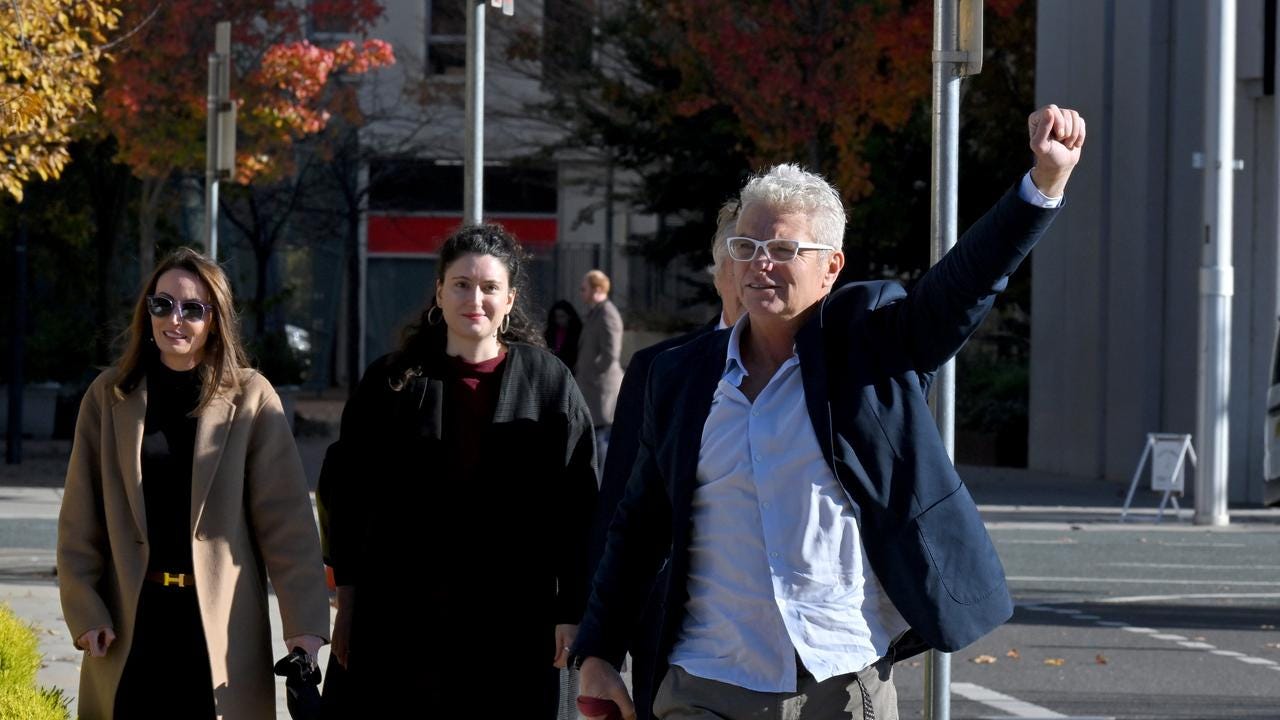
On release David McBride thanked his family, his supporters, correctional staff and inmates with dignity, and gave a nod to a higher power that held him safe: “I’d like to thank the God of my own understanding, whom I believe kept me and my family safe in an uncertain time.” He expressed his anticipation to hug his dog. Just like that, a man who never should have been in this situation was extricated from it by a political class who danced to a political tune, and put David McBride into a political shitstorm as a political football.
Gabriel Shipton, brother of Julian Assange and founder of The Information Rights Project, spoke for McBride: “David shouldn’t have gone to prison in the first place, but freeing a whistleblower will not go unnoticed. It’s real-world outcomes like these that make a difference to the lives of courageous individuals who blow the whistle.”
It is his comment, made in the shadow of his brother Julian Assange’s fate — “freeing a whistleblower will not go unnoticed” — that should stick. Just like locking up a whistleblower will not go unnoticed, freeing one generates interest, and Australians can thank the rule of law for finally delivering a measure of justice in this case where others with power did not.
McBride was saved from a sentence he never should have received. A man with a family, a person who loves this country, and an individual who represented the essence of the Australian spirit — of who we thought we are — is no longer caged in. Good luck to him and his family.
Good on you David !
Wonderful news ! No one could convince me that the Attorney General was “unaware” of Divid McBride’s case , and the obscenity that he was sent to prison . This AG has been very obedient to the Albanese government’s dictates . That another Australian citizen , Dan Duggan still lives in fear of being deported to America is a further obscenity . What a waste of space this government is !