

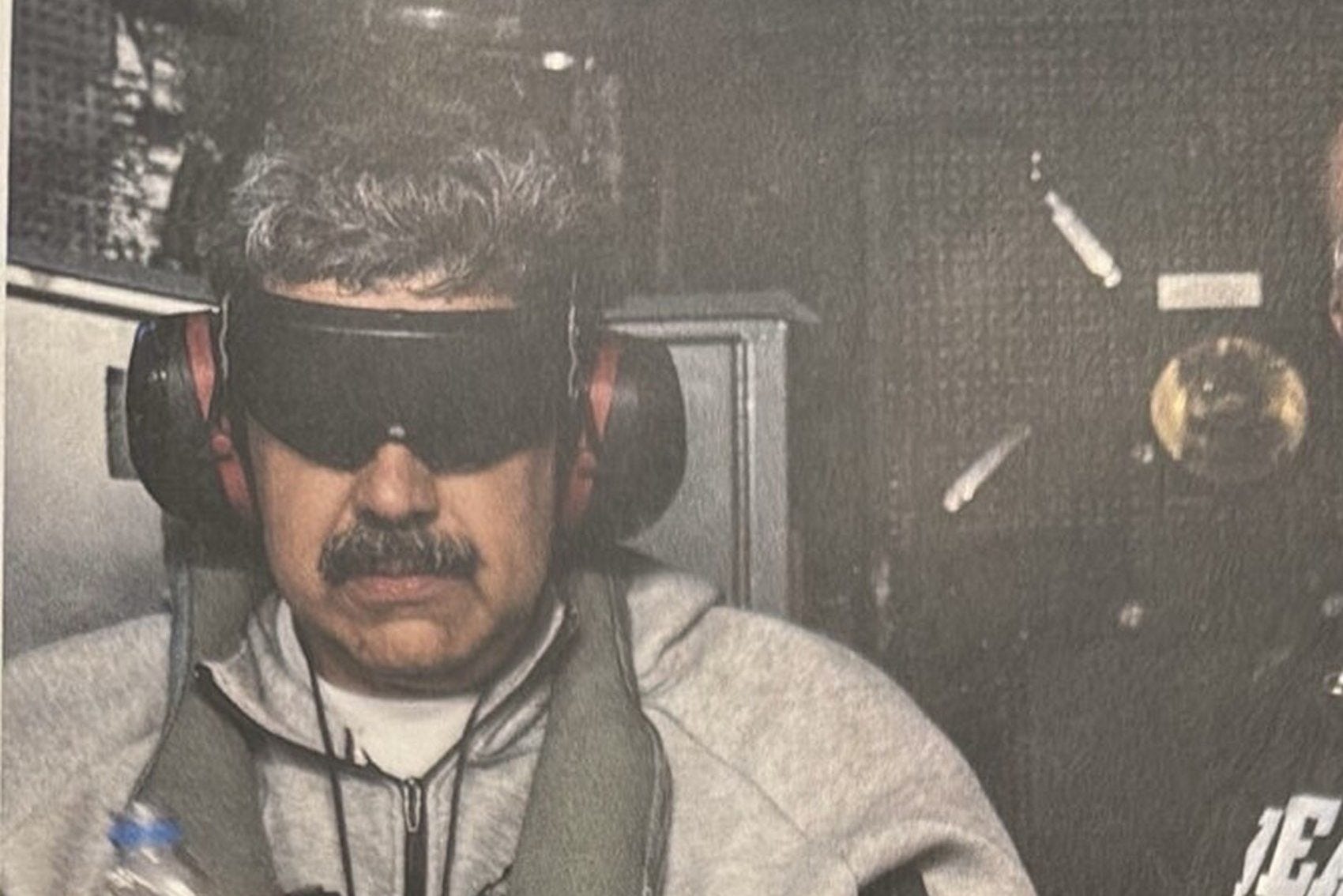
Dramatic images beamed out from a late night United States military raid on the sovereign nation of Venezuela that resulted in the kidnapping and rendition of its popularly elected leader Nicolás Maduro. The illegal action has shocked the international community, and highlighted the redundancy of international law in a period that has seen illegal invasion, extrajudicial targeting of world leaders, and genocide returning to the menu under the US-led western order—reflecting a significant shift in its strategic outlook.
The kidnapping of Nicolás Maduro sends a stark warning, signalling a new regime-change model for nations challenging US hegemony in its sphere of influence.
As it stands, apart from the rendition of Maduro, the targeting of military assets, and dozens of dead Venezuelans, the Chavista government in Caracas remains intact— as does its military command, and as far as Trump is concerned, the situation is done and dusted. Yet while an entire nation comes to terms with the kidnapping of its popularly elected leader, and the region begins to understand what may come next, the gravity of what has just occurred is setting in, and the consequences are only beginning to reveal themselves.
This operation does not emerge in a vacuum, following a continuum of attempts to overthrow the Bolivarian revolution since the Washington-backed coup against Chavez in 2002. The raid on Venezuela marks a period of aggression and imperial power in the region, clearly outlined in the 2025 US National Security Strategy which seeks to focus on hemispheric dominance in Latin America, and a return to focusing on regional hegemony in the spirit of the Monroe Doctrine — a doctrine that has defined US foreign policy, in varying degrees, for over two-hundred years. In an already strained global setting, the kidnapping and rendition of the internationally recognised Venezuelan President Nicolás Maduro threatens to fully unravel the international order established in the post-war period.

In November, Trump released his 2025 National Security Strategy (NSS) clearly delineating the shift we are witnessing in US strategic posture—a shift that has directly resulted in the actions in Venezuela. The strategy outlines a narrower set of US interests, a withdrawal from great-power competition as a foreign policy priority, and a return to hemispheric dominance. The recent NSS differs from previous iterations in its treatment of great-power contest: it no longer sees Russia as an acute threat but rather focuses on “managing European relations with Russia”, and it recasts China less as a long-term “pacing challenge” and more as a partner with whom to “rebalance America’s economic relationship”.
The new NSS, represents a significant pivot from the strategies of the past generation, and seeks not only to return to Monroe Doctrine principles, but to secure US resource security regionally, while aiming to ‘nearshore’ US corporate manufacturing and production within the ‘Western hemisphere’. Within the scope of this ambitious-— though disordered —strategic pivot being driven from the White House is an effort to reorganise the US global footprint within its own hemisphere, and an implied willingness to accept the concept of spheres of influence.
This shift builds on a long history of intervention. It’s not like we have not seen US imperial acts of aggression in the region throughout the decades. Venezuela is merely the latest victim in a long string of US interventions in Latin America; it wasn’t too long ago that the Reagan-era military actions in Panama, Nicaragua, and El Salvador were standard operations. It could be argued that the US became distracted in Latin America by its more global interests— including the Global War on Terror —and the return to operations like Venezuela were only a matter of time. Alternatively, it could also be argued that the new strategic outlook is a reactive response to the rise of China as a global economic and military superpower, and the inability of the US to compete in an open, free-trade global market.
It was during the last era of great-power rivalry — the Cold War, when the Soviet Union and the United States competed across the globe — that the US previously had a more direct hand in Latin American politics, under the guise of opposing left-wing socialist movements in the region. Since the end of the Cold War, US strategic vision has taken a more global, unipolar outlook; the framework of the new NSS, however, clearly intends to realign a newly defined world order around spheres of influence.
Muammar Gaddafi was raped with a bayonet and killed in a culvert outside Sirte, Libya, by US -backed opposition rebels; Saddam Hussein was hanged after a show trial; Bashar al-Assad fled to Russia. And now Maduro has been slapped in cuffs, blindfolded alongside his wife, and renditioned to the United States for a show trial. What makes the removal of Nicolás Maduro any different from previous US-led regime-change operations that have happened before?
Yet there is a crucial distinction. The action in Venezuela is the first decisive and exclusive regime change action of the Trump administration since it took power barely a year ago. Trump inherited the war in Ukraine, and the genocide in Gaza, but it is Venezuela that has been executed in the frame work of the new NSS, under the bluster of Trump’s leadership. The White House may be seeking to take credit for the swift capture of Maduro, and with loose rhetoric around Cuba, Mexico and even Greenland no longer dismissible as hyperbole after the shock and awe of Venezuela, this model may well become the preferred vehicle of regime change within the new delineations of Monroe 2.0, and something Trump may have the confidence to replicate again in the near future.

What does this say about Iran? Israeli Prime Minister Benjamin Netanyahu, while in the US, offered his own take on the Venezuela situation, managing to shoehorn Israel’s interests into the regional crisis. In an interview on US television he drew the longest bow to link Hezbollah cells and Iran to the Maduro government, urging Trump to act— and later thanking him for doing so. With talk of war with Iran already in the air — bolstered by US airstrikes on Iran last October and shaped by four decades of relentless lobbying by Netanyahu — Venezuela may be a key stepping stone toward that larger confrontation.
Venezuela has been considered on both sides to be a member of the international axis of resistance, and a fierce supporter of Palestine; capturing it allows access to vital Venezuelan oil fields and resources that may be needed if others are removed by escalating tensions with Iran, such as a closure of the Straits of Hormuz.
Disappointing responses came quickly from Europe--which all but supported the illegal operation, as it has with other US initiatives, including Israel’s operations in West Asia—and from Australia. Despite its frequent claims to uphold international law, Australia is having a doozy of a few years supporting murky military operations, dithering on UN declared genocides, and now offering another diplomatic contortion over Venezuela. This is yet another example of Australian leaders cherry-picking the vestiges of international law as it crumbles while insisting on its vital importance to our survival as a middle power.
The US is sending a clear message to the world through the capture and overthrow of President Maduro. Footage of the Venezuelan leader blindfolded and handcuffed — like a captured prize from the Punic Wars — has marked the death knell of the illusion of international law, finally catching up with the death of international law proper, which perished sometime between the invasion of Iraq, the murder of Gaddafi, and today. Whatever comes after the Venezuelan operation, and however successful the Monroe-flavoured strategic realignment proves, the United States is clearly in a period of tectonic change — and no responsible nation, within or outside the US orbit, can rationally ignore it.
What does this all mean for the US–Australia alliance and AUKUS? If Australia remains a key US military ally, will it be asked to assist in potential conflicts in the Western hemisphere? If Washington suddenly narrows its strategic focus to a more regional outlook and seeks to define clear boundaries for opposing spheres of influence with China, where does that leave the China-containment strategy that has been canonical US policy since Obama announced the “Pivot to Asia” from Parliament House in Canberra in 2011? The current approach in Australian defence circles — under Defence Minister Richard Marles — emphasises interoperability of Australian assets within the US strategic umbrella, ostensibly for an inevitable war with China. What if that interoperability is now redirected toward assisting US actions in its own backyard — propping up regime-change operations, enforcing blockades in the Caribbean, or securing resource grabs across Latin America? For a middle power like Australia that has long tied its security to upholding a “rules-based order,” this pivot risks turning our forces into enablers of Washington’s neo-colonial adventures rather than defenders against Indo-Pacific threats.
It is now up to the nations of the world to catch up and decipher the murky new rules that are being set by Washington. Marco Rubio has already declared Cuba next and Greenland rhetoric is flowing from top officials that escalated before Maduro’s fingerprints were even dry. The world stands still, heads in the sand, praying that the diminishing pillars of the international system will somehow rebuild over the remaining three years of the Trump administration. Canada may be safe — for now — but Trump mentioned Mexico in the same breath as Venezuela in a recent press conference. What can be trusted coming out of Washington, by friend or foe alike?
So, with the raid on Venezuela being callously and ignorantly celebrated by the US political and media class, what is to stop China from moving on Taiwan? What if Russia decided to kidnap Zelensky, inspired by America’s act of illegal rendition in Venezuela? Blockades like the one we saw building in the Caribbean could become more common, as piracy, plunder, and subjugation frame a new age of neo-colonialism — a return to a status quo where power and theft define the rules of the world.
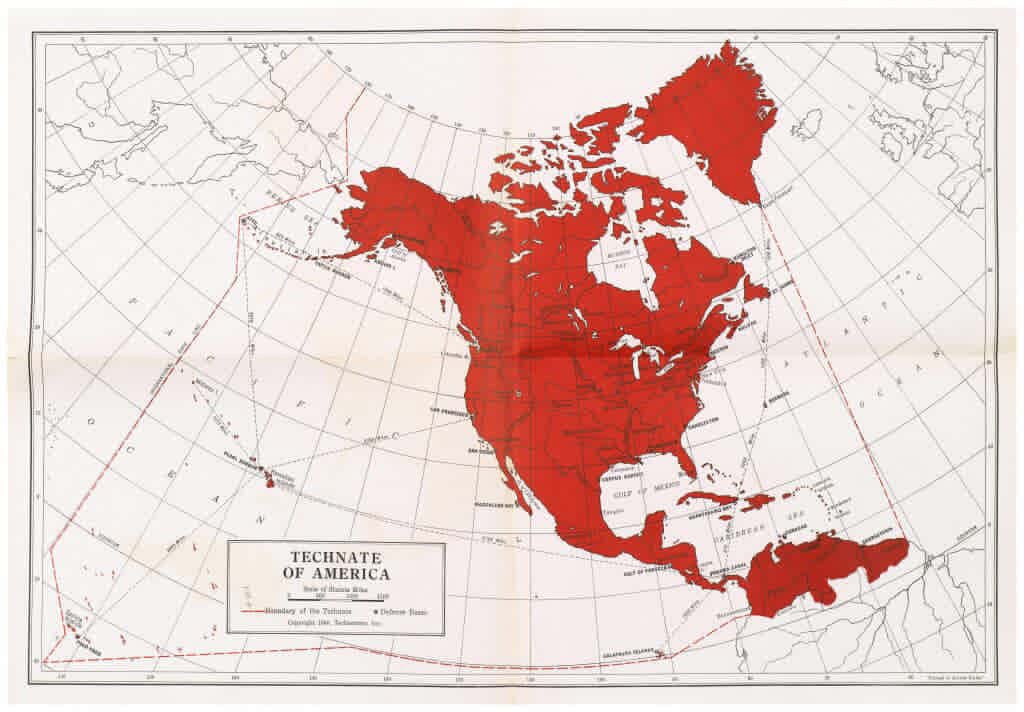
Trump openly spoke about commandeering Venezuela’s resources, and now refers to them as newly acquired treasure in the aftermath. On Air Force One, barely days after ordering the raid, President Trump stated matter-of-factly that “Cuba was ready to fall”, and, when asked about a similar fate for Colombia, replied, “sounds good to me”. The White House has announced that the US will run Venezuela in the short term, and has signalled intent to repeat its actions of regime change and resource capture across Latin America: this is a clear message: the US is prepared to act unilaterally and rapidly to secure its territorial interests and its neo-colonial ambitions.
Veteran journalist Chris Hedges says the kidnapping of Nicolás Maduro and his wife “solidifies America’s role as a gangster state,” warning that such actions will generate “a world without laws, a world of failed states, warlords, rogue imperial powers and perpetual violence and chaos” — an unpredictable environment that is bad for the world, and, ultimately, bad for the United States itself. Apart from kidnapping an international leader in his own country, agitating a sovereign population, and commandeering resources to plunder, the Trump White House looks indistinguishable from a gangster: shaking down allies for protection money and whacking countries it doesn’t like the moment they challenge Washington’s disruptive worldview.
Thank you Joel for this analysis.
The heinous crime we have witnessed is criminal, and obvious trashing of international law.
Cue the ‘serious’ media and politicians of the sycophantic West wagging the finger at Maduro, the elected Head of State, and side stepping the issue of legality entirely. ‘It is legal because we make it so!’, they effectively say. In reality the sycophants to Washington are titillated by this show of illegality, and show themselves as never having believed in international law in the first place.
And not one segment by the MSM on the civilian casualties by this naked act of aggression.
The disgraceful ABC last night spent some 3 minutes talking about how this will provide an opportunity for oil producers. Capitalist greed and business opportunities from kidnapping and murder.
Great analysis. America persists as the West’s “indispensable nation,” not by invitation but by compulsion. The American empire, long invisible, now stands in stark relief: assertive, unavoidable, and increasingly defined by coercion rather than consent. Australia is part of America's empire, and I have no doubt that we would send troops to support a US-initiated war in Latin America if the former asked for them. We have not refused such requests since they took suzerain control of us in 1942. Why would we now?